

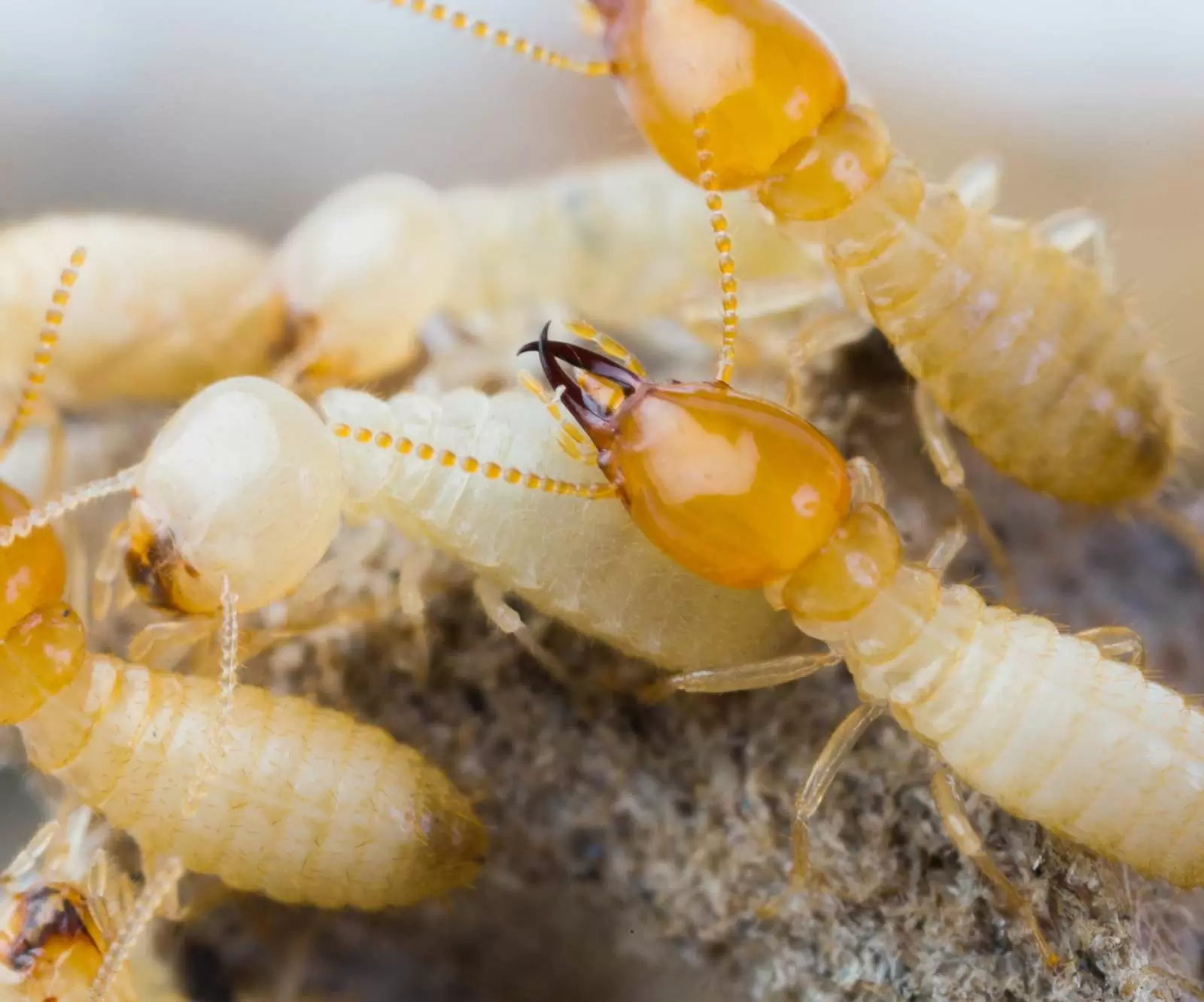
Termites
Termites: What Do They Looks Like? How to Get Rid of Termites and Understand Their Life Cycle
Termites are destructive pests that can cause serious damage to wooden structures, furniture, doors, ceilings, flooring, and other materials containing cellulose. They are commonly found in residential buildings, hotels, offices, warehouses, and other properties. Because termite often feed inside wood or underground, an infestation can remain unnoticed until visible damage appears.
Understanding what termite look like, how they develop, and how to get rid of them is essential for protecting your property. Early detection and appropriate termite control can help reduce structural damage and prevent an infestation from spreading.
At EOA Pest Control Services, we provide professional pest control solutions to help property owners identify termite problems and determine suitable treatment options.
What Do Termites Look Like?


Termites are small, soft-bodied social insects that live in colonies. They feed mainly on cellulose, a substance found in wood, paper, cardboard, and other plant-based materials.
Their appearance varies according to their species and role within the colony. Most termites are pale cream, whitish, or light brown, although reproductive termite may be darker.
Common physical characteristics of termites include:
- Soft bodies: Most worker termites have soft, pale bodies.
- Straight antennae: Their antennae are generally straight or slightly curved, unlike the distinctly elbowed antennae of ants.
- Broad waists: Termites usually have bodies without the narrow, pinched waist seen in ants.
- Six legs: Like other insects, termites have six legs.
- Colony-based behavior: They live in organized colonies containing different groups, including workers, soldiers, and reproductive termite.
What Do Different Types of Termites Look Like?
Termites have different forms depending on their function within the colony.
1. Worker Termites
Worker termites are usually small, pale, and soft-bodied. They are responsible for gathering food, feeding other colony members, maintaining the nest, and helping care for young termites.
They are often the termites responsible for much of the damage to wooden materials because they continuously feed on cellulose.
2. Soldier Termites
Soldier termites protect the colony from threats. They often have larger heads and strong mandibles adapted for defense.
Depending on the species, their heads may be yellowish, brown, or darker than those of worker termite.
3. Reproductive Termites
Reproductive termites include the king and queen, as well as winged reproductive termite known as alates.
The queen produces eggs, while the king participates in reproduction. Winged reproductive termites leave mature colonies during dispersal flights to establish new colonies under suitable conditions.
4. Winged Termites
Winged termite, also called alates or swarmers, are reproductive termite that leave an established colony to reproduce and establish new colonies.
They usually have two pairs of wings of approximately equal length, straight antennae, and a broad waist. Their bodies may be darker than those of worker termite.
Winged termites are sometimes mistaken for flying ants. However, their body shape, antennae, and wings can help distinguish them.
Important: Finding winged termites or discarded wings inside a building may indicate a nearby termite colony or an infestation within the structure. A professional inspection can help identify the source.
What Is the Difference Between Termites and Ants?
Termites and ants may look similar at first, especially when both have wings. However, there are several differences.
| Feature | Termites | Ants |
| Waist | Broad, without a narrow pinch | Narrow and clearly pinched |
| Antennae | Usually straight | Elbowed or bent |
| Wings | Two pairs of similar length in winged reproductives | Front wings are usually longer than hind wings |
| Body | Often soft-bodied and pale | Usually more distinctly segmented, with a harder body |
| Food | Mainly cellulose and plant-based materials | Varies by species; may include sugary foods, insects, and other materials |
Correct identification is important because termite control requires different methods from ordinary ant control.
Signs of a Termite Infestation
Termites can remain hidden for long periods, particularly when they feed inside wooden structures or travel through underground tunnels. Knowing the warning signs can help you identify an infestation before extensive damage occurs.
Look out for these common signs:
1. Hollow-Sounding Wood
Wood damaged by termite may sound hollow when gently tapped. Termite can consume the inside of wooden materials while leaving a thin outer layer intact.
2. Mud Tubes on Walls
Subterranean termite often build narrow mud tubes along walls, foundations, pillars, and other surfaces. These tubes help protect them from exposure and maintain the moisture they need.
Mud tubes are a common sign of subterranean termite activity, although their presence should be assessed during an inspection.
3. Discarded Wings
Winged reproductive termites may shed their wings after landing and finding a suitable place to establish a colony.
Piles of similar-looking wings near windows, doors, light sources, or other openings may indicate termite swarming activity.
4. Damaged Doors, Frames, and Furniture
Termites can damage wooden doors, door frames, wardrobes, tables, cupboards, flooring, and other cellulose-containing materials. It is called Drywood Termite.
Paint may bubble or appear uneven when termite damage the material beneath it, although moisture and other problems can produce similar signs.
5. Visible Termites
You may occasionally find live termite in damaged wood, soil, mud tubes, or other protected locations. Worker termites are usually pale and may avoid light.
6. Weak or Damaged Wooden Structures
Advanced termite activity may weaken wooden components and cause them to break or deteriorate. If you suspect damage to a load-bearing structure, arrange a prompt assessment by an appropriate building professional as well as a pest control inspection.
What Is the Life Cycle of a Termite?
Understanding the termite life cycle is important because a colony contains different developmental stages and specialized groups of termites.
Termites undergo incomplete metamorphosis, meaning they develop through three main stages: egg, immature termite, and adult. Unlike butterflies, termite do not have a pupal stage.
1. Egg Stage
The termite queen lays eggs within the colony. The eggs are generally small and pale and are cared for by worker termite.
The number of eggs produced and the time required for them to hatch vary according to the species, colony conditions, and the reproductive stage of the queen.
2. Nymph or Immature Stage
After hatching, young termite develop through a series of growth stages. They gradually mature and may develop into workers, soldiers, or reproductive termites depending on the species and the colony’s needs.
Young termites depend on the colony for food and care. Their development is influenced by environmental conditions and the colony’s social organization.
3. Adult Stage
As termites mature, they develop the characteristics associated with their colony role.
- Workers gather food, maintain the nest, and care for young termites.
- Soldiers defend the colony.
- Reproductives help maintain or establish colonies.
Workers and soldiers may remain active within the colony for varying periods, while reproductive termites have roles associated with producing offspring and establishing colonies.
4. Swarming and Colony Formation
When a colony reaches a suitable stage of maturity and environmental conditions are favorable, winged reproductive termites may leave the colony in a swarm.
After dispersing, successful reproductives shed their wings and seek suitable nesting conditions. A pair may establish a new colony, where the queen begins laying eggs.
Not every swarmer successfully establishes a colony. However, swarming can be an important sign of termite activity in the surrounding area.
How Long Does the Termite Life Cycle Take?
The time required for termites to develop varies by species, temperature, moisture, food availability, and colony conditions.
A termite colony may take months or years to develop into a mature colony capable of producing large numbers of winged reproductives. Some colonies can persist for many years under favorable conditions.
This slow but continuous development means that termite activity may remain hidden while damage gradually increases.
For subterranean termites, soil treatment may be recommended when appropriate to the site and infestation. The treatment plan should account for the building layout and the extent of termite activity.
In some situations, treating connected or adjoining areas together may be more effective than treating only one section, particularly when termites may move between connected parts of a structure. The recommended scope depends on the inspection findings.
If you suspect termites in your property, contact EOA Pest Control Services to discuss your concerns and arrange an assessment.
Why Do Termites Return After Treatment?
Termite activity may continue or reappear after treatment for several reasons.
The colony has not been fully addressed: Visible termite may represent only a small portion of a larger colony.
Treatment coverage was insufficient: Termite may continue entering through untreated soil, concealed gaps, or other access routes.
Moisture problems remain: Persistent leaks and damp conditions can continue to support termite activity.
Nearby colonies remain active: Termite may enter from surrounding soil, neighboring structures, or other untreated areas.
The wrong treatment method was selected: Different termite species and infestation conditions may require different approaches.
For these reasons, effective termite management should include proper inspection, appropriate treatment, prevention measures, and follow-up monitoring where necessary.
Why Choose EOA Pest Control Services for Termite Control?
Termites can cause costly damage when their activity remains undetected. Choosing a professional pest control provider can help you understand the extent of the infestation and determine suitable treatment options.
At EOA Pest Control Services, we help property owners address termite problems through inspection, targeted pest management, and practical prevention advice.
Our pest control services can support a range of properties, including:
- Homes and apartments.
- Residential estates.
- Hotels and guest houses.
- Offices and commercial buildings.
- Schools and institutional properties.
- Warehouses and other facilities.
We recognize that every termite infestation is different. Our approach considers the likely termite species, the building structure, the affected areas, and the control measures needed for the particular property.
Our goal is to help clients manage termite activity and reduce the risk of further damage through appropriate pest control and preventive measures.
Frequently Asked Questions About Termites
What do termites look like?
Termites are small insects with soft bodies, straight antennae, and broad waists. Worker termites are usually pale or cream-colored, while winged reproductive termite may be darker and have two pairs of similar-length wings.
What attracts termites to a building?
Termites may be attracted to buildings that provide accessible cellulose materials, suitable moisture, shelter, and entry points. Leaking pipes, damp soil, wood-to-soil contact, and susceptible timber can contribute to termite problems.
What is the life cycle of a termite?
Termites develop through three main stages: egg, immature termite, and adult. They undergo incomplete metamorphosis and develop into different colony roles, including workers, soldiers, and reproductives.
Can termites destroy a house?
Termites can damage wooden components of a building, including frames, flooring, roof timbers, doors, and other structural materials. The extent of damage depends on the termite species, colony activity, building materials, and how long the infestation remains undetected.
Do termites bite humans?
Termites are not generally considered a threat to humans through biting. Their main concern is the damage they can cause to wooden structures and other cellulose-containing materials.
Can termites live in concrete?
Termites do not eat concrete, but subterranean termite can travel through cracks, joints, gaps, and concealed openings in concrete structures to reach wood and other cellulose materials.
Does fumigation kill termites?
The effectiveness of a treatment depends on the termite species, the treatment method, and where the colony is located. Some infestations require targeted timber treatment, soil treatment, or other specialized termite management methods rather than ordinary general-purpose fumigation.
How can I prevent termites from returning?
Reduce moisture problems, repair leaks, limit direct wood-to-soil contact, inspect susceptible timber, and address entry points where possible. Follow professional recommendations for monitoring and any additional treatment that may be needed.
When should I call a professional termite control company?
Contact a professional if you notice mud tubes, discarded wings, hollow-sounding wood, damaged timber, or repeated termite swarms indoors. Early inspection can help identify the problem before damage becomes more extensive.
Get Professional Termite Control with EOA Pest Control Services
Termite can cause serious damage to wooden structures and other materials when their activity is left unmanaged. Understanding what termite look like, how they develop, and the signs of infestation can help you take action early.
However, effective termite control requires more than removing visible termite. It involves identifying the source, selecting an appropriate treatment, and addressing the conditions that allow termite to access your property.
Contact EOA Pest Control Services today to discuss your termite problem and arrange a property assessment. Whether you have noticed termite activity in your home, hotel, office, school, or commercial building, our team can help you determine suitable termite control measures.
Protect your property and take a proactive step towards managing termite infestations with EOA Pest Control Services.

